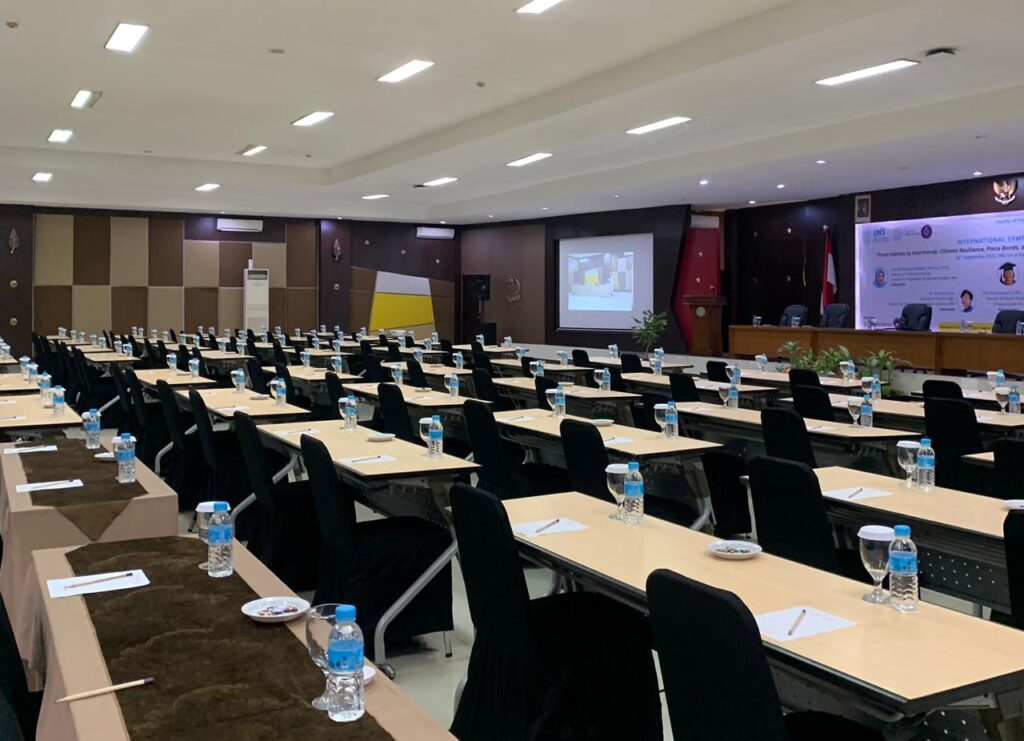
Surakarta, September 10, 2025 – The Faculty of Psychology, Universitas Sebelas Maret (UNS), in collaboration with the Center for Population and Gender Studies (PPKG) LPPM UNS, successfully conducted an International Symposium titled “From Islands to Heartlands: Climate Resilience, Place Bonds, and Gendered Insight for Sustainable Change.” The symposium was held on Wednesday, September 10, 2025, at UNS Inn Surakarta and online via Zoom as a hybrid event. This international forum aimed to foster interdisciplinary dialogue on climate resilience, human environment relationships, and gender perspectives in achieving sustainable development.
The symposium officially commenced with participant registration, followed by an opening session that set the tone for the event. The opening remarks were delivered by representatives of the organizing committee and UNS leadership, highlighting the importance of integrating social, cultural, and gendered insights into climate and sustainability discourse. The session emphasized UNS’s commitment to advancing impactful research and global collaboration aligned with the Sustainable Development Goals (SDGs).
The main agenda featured a series of keynote and invited presentations delivered by distinguished national and international speakers. Fitri Kusumasari, S.Psi., M.K.M. from the Faculty of Health Sciences, Universidade Dili (Timor Leste), shared insights on community resilience and health perspectives in island contexts. Dr. Marie-Laure Parmentier from INSERM (French National Institute for Health and Medical Research), France, presented evidence based research linking place attachment, health, and environmental change. Meanwhile, Effendy Aritonang, MDiv-ICUS from Yayasan Fondasi Hidup (Food for the Hungry Indonesia) discussed grassroots experiences in strengthening community resilience amid climate challenges.
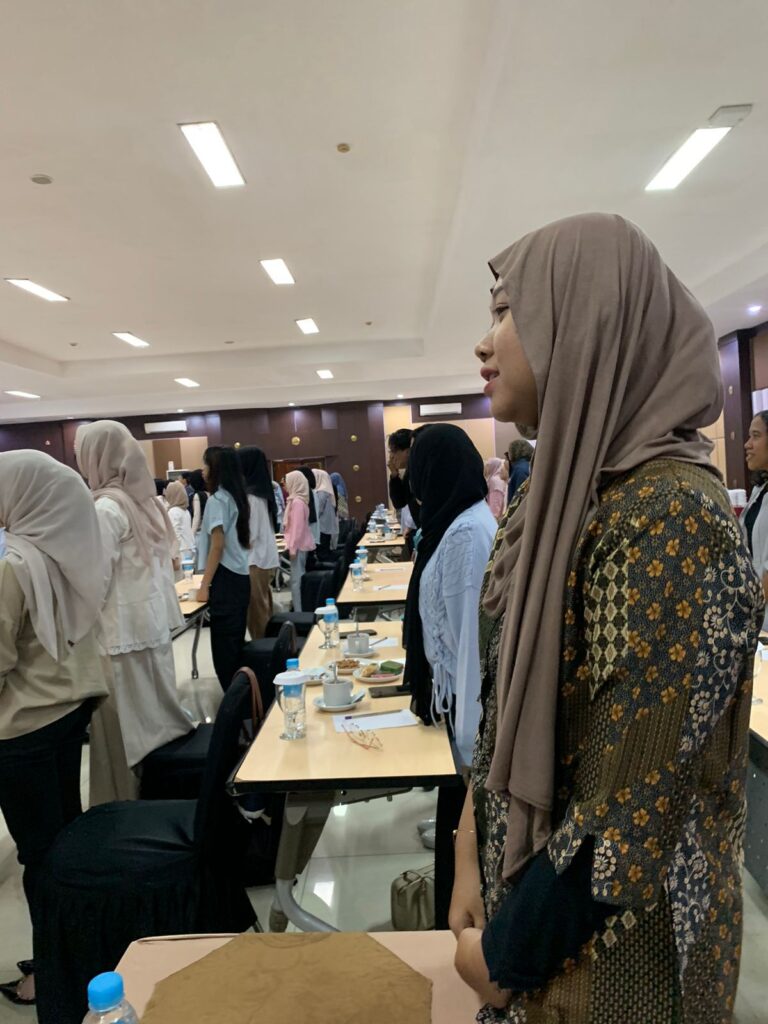
Further enriching the discussion, Dra. Sri Kusumo Habsari, M.Hum., Ph.D. and Dr. Andrian Liem from UNS explored cultural, psychological, and gendered dimensions of place bonds and sustainable transformation. Each session was followed by interactive discussions, allowing participants to engage directly with the speakers through questions and reflections, both on-site and online.
The symposium concluded with a synthesis session summarizing key insights and reinforcing the urgency of collaborative, inclusive, and gender-responsive approaches to climate resilience and sustainable change. Overall, the International Symposium was attended enthusiastically by participants from diverse academic and professional backgrounds and ran smoothly as planned. The event marked a significant contribution by UNS and PPKG in strengthening international academic exchange and promoting socially impactful research for a more sustainable future.
